Showing posts with label Deen. Show all posts

Saturday, March 18, 2017

Al Jamea Tus Saifiyah


The history of Aljamea-tus-Saifiyah is synonymous with the history and tradition of Fatemi education established at the dawn of #Islam. Though #Aljamea today is in the form of a physical institute, in spirit Aljamea is the educational legacy of the Dawoodi Bohras.

The Holy Quran is considered the source of all knowledge in the Islamic tradition.


The bedrock of this movement has always been and will always remain the Holy Quran, which in its first articulation asked the Prophet Mohammed SA, and through him, all of humankind to read and learn. The Prophet SA made the seeking of knowledge compulsory for every Muslim man and woman. He, along with his legatee, Amirul Mumineen Ali bin Abi Talib SA, and the Imams of their progeny ensured that the repository of divine knowledge and its tradition of learning would continue in the form of a dynamic movement through the ages. This movement blossomed during the course of the second/ eighth century when Imam Mohammed al-Baqir SA and Imam Jafar al-Sadiq SA, the 4th and 5th imams respectively, categorised and elaborated upon the corpus of jurisprudential knowledge they inherited from their noble grandfather the Prophet Mohammed SA and educated a generation of notable jurisprudents. The encyclopedic epistles of Ikhwan al-Safa, composed by Imam Ahmad al-Taqi SA during the third/eight century illustrated the divine nature of knowledge and confronted al-Mamun’s rationalistic dogma which he endeavoured to spread across the Islamic world, thereby undermining prophetic revelation. The epistles of Ikhwana al-Safa prove that divine revelation encompasses other philosophies and branches of knowledge and that each discipline when perceived with discerning eye of the Imam, attests to the existence of Allah and brings one closer to Him. The foundations established by these imams impelled a civilisation that saw all forms of learning flower upon an epistemology soundly rooted in the Islamic value system. Science and philosophies developed under the firm belief of a created purposeful universe. In this milieu, the Fatemi state, headed by the imam from the progeny of the Prophet, excelled and bequeathed to posterity its rich philosophy of education and noble legacy of knowledge.

Soon after founding the city of Cairo, Imam Moiz le Deenillah SA established al-Azhar University, one of the oldest universities in the world existing till present day. After teaching sessions were initiated in 365/975, it subsequently became famous for the quality of its tuition and for granting free boarding and lodging to students. Imam’s chief justice Syedna al-Qadi al-NumanRA was a prolific thinker and writer who authored books on jurisprudence, history, ethics and philosophy. His comprehensive jurisprudential work Da’im al-Islam was and remains the authoritative Fatemi code of law. Similarly, in 395/1005 Imam al-Hakim be Amr Allah founded the House of knowledge in Cairo which attracted intellectuals from all over the world. The subjects taught included history, literature, jurisprudence, lexicology, grammar, law and medicine. The House and its magnificent library of thousands of works were open to all. His chief Dai, Syedna Hamiduddin al-Kirmani RA exhibited mastery over many disciplines, the most notable among them being philosophy on which he has written a number of significant works. This efflorescence of scholarship reached its zenith with the eight hundred treatises of Syedna Muayyad al-Shirazi RA that discussed Quranic interpretation and Fatemi philosophy in an unprecedented manner of discourse.

Following the seclusion of the imams, their vicegerents, the Du’at Mutlaqeen RA preserved and enriched the tradition of education and learning that was the essence of Fatemi civilisation. The Du’at fostered the Fatemi educational system in Yemen and continued to document the history and philosophic heritage of the imams in writing, building up a priceless library of manuscripts. Treatises composed by Tayyibi Dais in Yemen represent one of the greatest corpuses of literature on the concepts of Ismaili and Fatemi cosmology, theology and philosophy and are the focus of scholarly study to this very day.

His Holiness Dr Syedna Mohammed Burhanuddin RA gracing the bethak or seat from where his predecessors would conduct teaching sessions from in Jamnagar, India.

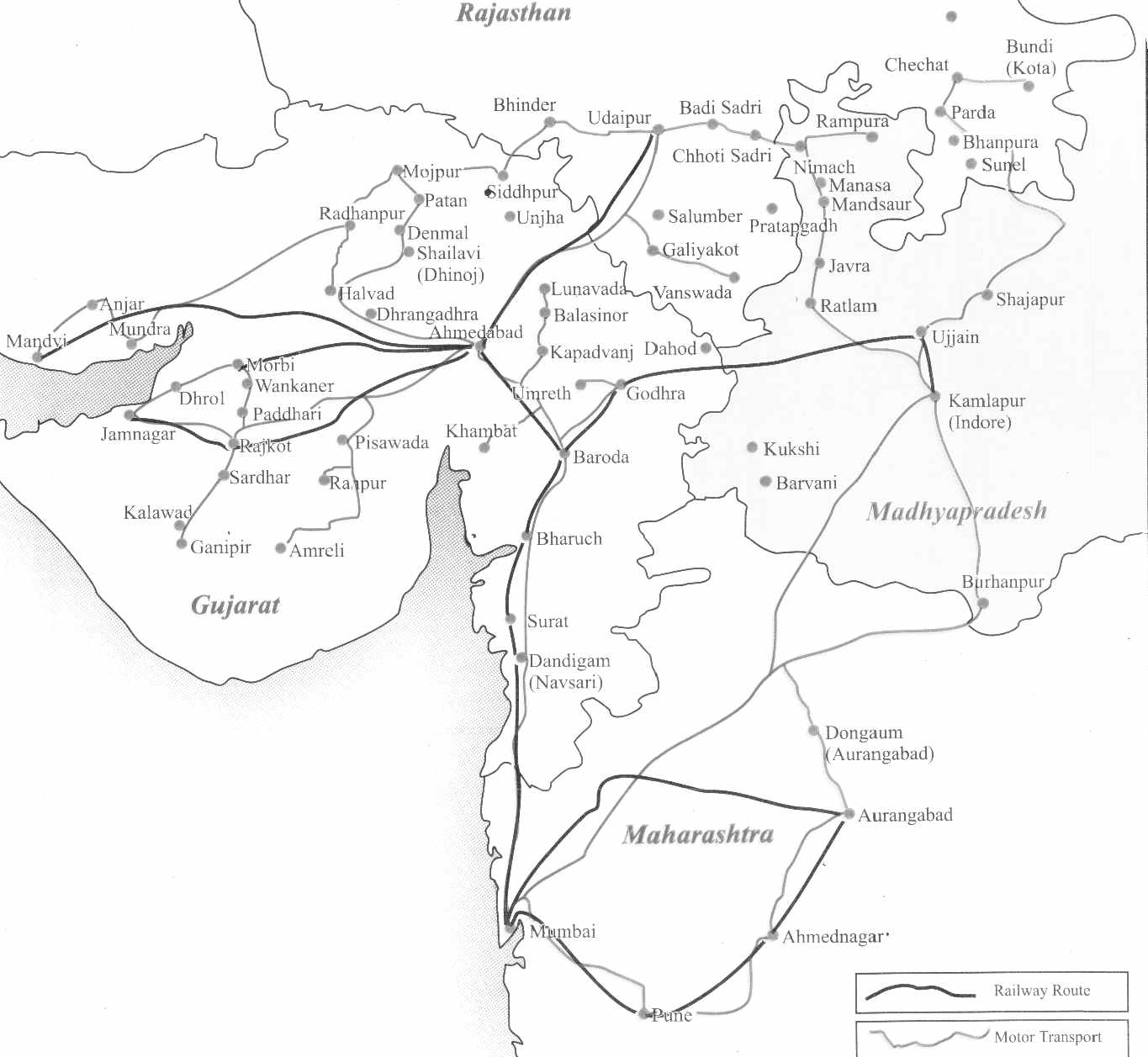
Over four centuries ago in 946/1539, when the Du’at came to India the locus of learning shifted with them. Ahmedabad, a city in western India soon became the seat of Dawat where the 27th dai #Syedna Dawood bin Qutubshah RA established an academy for Fatemi theology. Since the community at that time was perceived and labelled as a non-conforming and heretical minority by various governors and clerics, it suffered extensive persecution and discrimination at their hands. However, the Du’at adhered to their traditions of learning, never failing to fulfill their responsibilities even in the direst of circumstances. In these trying times, teaching sessions were sometimes held on rooftops late at night or even in underground shelters. This movement shifted with the Du’at as their seat of Dawat transferred from Ahmedabad to other cities in India such as Jamnagar, Mandvi, Ujjain, Burhanpur and finally to Surat. In 1225/1810 almost after three centuries, this educational movement was institutionalised by the 43rd Dai Syedna Abdeali Saifuddin RA in Surat and took the name of Darse Saifee. In this purpose built academy, funded from Syedna Saifuddin’s RA own personal wealth, stages of learning were defined and an academic hierarchy was formed. After centuries of transition and flux, the education movement of #DawoodiBohras took root in the city of Surat, India.

Saturday, March 08, 2014

Syedna Mohammed Burhanuddin RA


Glimpses of Hayat Tayyeba (Life) of the 52nd Da al-Mutlaq al-Hayy al-Muqaddas Syedna Mohammed Burhanuddin RA, spiritual head of the Dawoodi Bohra Muslim Community.

Janazah Mubarak Series - Reasons NOT to believe Daawedar's Daawedari

All Mumineen should read 53 reasons not to believe Daawedar's Daawedari. You can also listen to the reasons.
Read more reasons at http://nottobelieve.com. You can also listen to these reasons at http://nottobelieve.com/?r=1000.

Monday, February 17, 2014

Analysis of Nass Video - Reasons NOT to believe Daawedar's Daawedari

Khuda ta'ala Syedna Mufaddal Saifuddin (TUS) ni Umr Shareef Ta' roze Qayamat Daraaz Karjo. - Ameen
All Mumineen should read 53 reasons not to believe Daawedar's Daawedari. You can also listen to the reasons.
UPDATE: #5 Analysis of Nass Video on Khuzaima Qutbuddin's Website
In the un-edited version of the video uploaded by the Fatemi Dawat site, at exactly (26:53 to 26:57) Syedna Mohammed Burhanuddin says “Mufaddal Bhai ne Nass nu Taaj“. We can also clearly hear Moula stating “Khuda Barakat Aape” (32.40 – 32.43). This statement of Moula is in response to Shz Qaid Johar Bhaisaheb’s Araz. Although most of the other words are a bit muffled, these statements are very clearly heard. Please view this link for the video:
https://tune.pk/video/1969681/Raudat-Tahera-19-Rajab-1432H
(The original video posted by the FatemiDawat has been removed, but is available here) This refutes their claim that the statement wasn’t clear, Moula’s speech was impaired, and Syedna Burhanuddin did not perform the Nass publicly.

Saturday, February 15, 2014

About the blogger and Fatemi Dawat

The blogger is a proud member of the Dawoodi Bohra Community, under the leadership of the 53rd Dai al-Mutlaq Syedna Mufaddal Saifuddin TUS.

This website is not officially affiliated with Fatemi Dawat.

Thursday, February 13, 2014

Nine More Reasons NOT to believe Daawedar's Daawedari

Khuda ta'ala Syedna Mufaddal Saifuddin (TUS) ni Umr Shareef Ta' roze Qayamat Daraaz Karjo. - Ameen
All Mumineen should read 53 reasons not to believe Daawedar's Daawedari. You can also listen to the reasons.
Read more reasons at http://moulamufaddal.com. You can also listen to these reasons at http://moulamufaddal.com/?r=1000.
Please forward this to all mumineen. It is a humble request from an adna gulam.
It is a request from an adna mumin to subscribe to Mufaddal Moula Zindabad group for updates.

Wednesday, January 29, 2014

The Dai al-Mutlaq himself is the Mazoon and Mukasir

The Dai al-Mutlaq is an office of Imamuz Zaman AS during seclusion and is the summoner towards Allah with his permission, thus being the guardian of Dawat and all the rutbas that are within the conclave of Dawat.
A Dai is appointed by his predecessor by Nass with the Ta'eed and ilham of the Imam AS and therefore it is not necessary that every Mazoon, a rutba which follows the Dai and lofty within itself, would become a Dai. The status of Dai al-Mutlaq encompasses both the rutba of Mazoon and Mukasir being a sole entity and office in itself.
Syedna Mohammed Burhanuddin RA has clearly defined and elaborated this tasawwur in several waaz. Below are a few excerpts from the Iqtebasaat Nooraniyah.
http://akhbar.mumineen.org/archive/fatemi-dawat/dai-is-mazoon-mukasir/

Wednesday, May 12, 2010

Friday, September 18, 2009

Barakaat of Syednal Moayyad al-Shirazi (RA)

Huzurala (TUS) in the Zikra waaz connoted the nasihat of Amirul Mumimeen (AS) to Kumail bin Ziyad in a very unique way by comparing it to the istetar (seclusion) of Imam al-Tayyib (AS) and the Qiyam of Duat Mutlaqeen al-Kiram (AS). Amirul Mumineen (AS) compares ilm with wealth and thus the situation of satr is described in the narration. Duat were handed over the wirasat of ilm which is eternal compared to the worldly estate of the Fatemiyeen Aimmat (AS) which was lost by the person who claimed Imamat for himself, ie Abdul Majid. While the Duat have always shown their servitude to the Aimmmat (AS) even after a thousand years and the wirasat of ilm remains alive. Syednal Moayyad al-Shirazi who barakaat has passed on to the Duat Kiram (AS) has several times noted the hardships faced by the mohabbat and walayat of Aimmat Tahereen (AS). As a tutor of the Duat Kiram (AS) we see that they have adopted his seerat and have never looked upon the worldly treasure with an eye of greed nor even interest in it.
Syednal Moayyad's Qasaid are full of emotions and deep love for the Aimmat (AS) enclosed and wrapped in the patience over hardships. One qasida which has fascinated me and I think all khidmat guzaar should make it his/her principle in life is, the Qasida:
رضيت من العيش المرير المنكدا وصيرت جسم الحرص مني مصفدا
The first stanza itself suggests what the whole qasida is about. He says that I am happy with a bitter and tough life, and have subjugated the greed in me. Later he continues to say that he has parted with status and governance for those who fall on their knees in front of the mass. How true are these words today for those who call themselves the leaders of the world. be it the politicians or the diplomats. Its not that Syedna has parted with the throne but he continues to point out that he is glad enough to serve Allah and his Wali, and he need not serve any human servant. He has never buttered any hand to just for the sake of availing the opportunity of worldly gain.
The lofty thinking of Syedna further states that if his own virtues does not help him gain the status of a qualified leader then he does not accept leadership by any other means or any recommendations, for he has ever sought forgiveness of Allah and never raised his hands in asking any favours from anyone else. Never has his respect ever been dirtied by false accusations nor has he fed on bribery.
The above is a narration of his life in the Khidmat of Imamuz Zaman (AS) and his love for ilm and hikmat that he has passed on to the Duat Kiram (AS) in wirasat.
Today the waris of Syednal Moayyad (RA) is indeed ilm impersonified and our heads always bow in sajda for the dua of his long life. Ameen

Tuesday, September 08, 2009

Amirul Mumineen (AS) and his description of the materialistic world

Amirul Mumineen (AS), who had been privileged of being brought up by Rasulallah (SA). He had be in the company of the prophet ever since he was born and the impact of that company and its barakat was so laid on the his life, especially with the barakaat of wahye that Amirul Mumineen (AS) was called the prominent jurist by Rasulallah (AS). Jurisprudence does encompass many fields of knowledge as a judge is needed to finally decide on any subject brought forth to him. Since a very young age Amirul Mumineen (AS) had seen Rasulallah (SA) strive for Islam and its cause. He had seen Rasulallah (SA) differ with Molana Abu Talib when he was told to keep away from preaching Islam by Quresh, that if he would be given the sun in his right and moon in the left he would not bother to bend towards materialistic wealth. Ali (AS) had seen how Abu Talib (AS) supported Rasulallah (SA) in the Sha'b of Abu Talib during the days of Quresh's boycott. Ali (AS) had seen the Nabi's beloved and wealthy wife Khadija drain her wealth for the cause of Allah. From an age when a person does not even come to his senses, Ali (AS) had seen the facts of life and felt the world closely. Such a person of high stature in knowledge, upbringing, amal, closeness to the Nabi (AS), akhlaq and many vritues has described the worldly pleasures and it materialistic nature in a few but deep words that need to be quoted here for his love and remembrance.


Amirul Mumineen (AS) says:
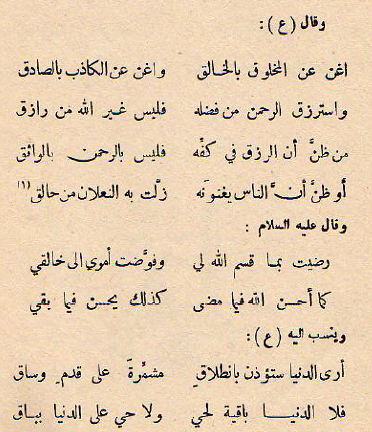
1. Trust the Creator rather than his creation, trust the Truthful rather than the lier.
2. Seek Rizq from al-Rahman (Allah), as there is no one else who can feed you except Him.
3. He who thinks that his rizq or earnings is in his own hands does not trust Allah.
4. He who thinks that a mere human can feed him or provide a living to him has gone on a slippery way and is sure to fall.
Amirul Mumineen (AS) further says:
1. I am happy with whatever Allah has parted for me and have submitted by will to by Creator.
2. Just as Allah has done my betterment in the past so will He in the future.
These words are said to to those of Amirul Mumineen (AS):
1. I anticipate that the world will soon be over and has prepared for its journey.
2. Never has the world been forever for anyone, nor has anyone stayed in the world forever.

Tuesday, April 14, 2009

Friday, September 05, 2008

Akhlaq - A bounty of Allah Subhanahu

Raulallah (SA) has said that good character is a bounty of Allah Subhanahu. While there is a huge difference between character and etiquette, most people tend to mix it up. I am most font of the dua of Imam Ali Zainul Abideen, "allahumma inni auzobeba an tahsona fi rayil aine alaniyati...." and I think it is the most profound of all duas when it comes to seeking purity of heart and soul while teaching us that our amal should be purely for the sake of our lord.

Long time back I had complied an eBook on Akhlaq in Lisan al-Dawat (Akhlaq.pdf) on the occasion of being blessed the sharaf of Ziyafat al-Shukr of my Maula Syedna Mohammed Buhanuddin Aqa (TUS) with my classmates in Hadi Ashara in the year 1422. It is one of the most cherished memories which have been embedded in my soul among the many that Jamea Saifiyah has granted me. Huzurala (TUS) had since after then time and again blessed me with the sharaf of inquiring about what I do and may I be blessed with his khidmat till the last breath, whatever it maybe. With all my heart I have never sought the happiness of anyone accept my Maula (TUS) and will keep doing that no matter what begets.

Akhlaq My niyat then and now with the compilation and sharing of this eBook is to be blessed with the nazaraat of Aqa Maula (TUS) which would bring out the best in me for his khidmat and deteriorate the barriers of weaknesses in me and turn them into strengths for the sake of the love of Aqa Maula (TUS) that I have inborn.

May Allah Subhanahu bless Aqa Maula Syedna Mohammed Burhanuddin (TUS) with a long life. Ameen.

Monday, August 25, 2008

Namaaz

Zindagi bewafa kyu hoti hai?
Wafa karnay ki saza kyu hoti hai?

Choti si baat pe baha deti hain KHOON
Insan mein itni ANA kyu hoti hai?

Karte hain hum jis se baar baar TAUBA,
Elahi hum se wohi KHATA kyu hoti hai,

Banate to hain hum apne hathon se MASJID,
NAMAZ apni hi phir QAZA kyu hoti hai..

Friday, June 13, 2008

Sunday, May 25, 2008

Shiites in Ashkelon?!


The city of Ashkelon has been in the headlines lately, and not for its pretty beaches. The city of 110,000 has sadly joined Israel's southern front line as rockets fired from the Gaza Strip improve in range and technology.

Last week, a rocket hit a shopping mall in city; the dozens of injured treated at the Barzilai Medical Center.

It turns out the hospital grounds contain a remarkably interesting bit of history: a site holy to certain Shiite Muslims, thousands of whom have come to pray there over the years. Ashkelon itself has 5,000 years of recorded history, but when the hospital was first built in 1961, nothing indicated that the hill out back was anything special.

The consecration of the site dates back to the early days of Islam. The decades that followed the death of the prophet Muhammad in 632 were marked by a bitter and bloody dispute over succession, a conflict that ultimately marked the split between Sunni and Shiite Muslims.

In a nutshell, Ali, Muhammad's cousin and son-in-law, was repeatedly passed over for the position of caliph -- leader of the young Muslim nation. Ali's followers (the word Shiite means "partisans") eventually rebelled, touching off years of conflict.

After Ali was assassinated in 661, his sons Hasan and Hussein carried on his struggle. Hussein and his small rebel army were slaughtered in 680 in what is now the Iraqi holy city of Karbala. His head was delivered as a trophy to Yazid, the victorious caliph, in Damascus, while his body remained in Karbala. Shiites commemorate Hussein's death annually in the intense day of mourning known as Ashura.

Both Karbala and Damascus became sites of Shiite pilgrimages. Sunni rulers, displeased with the phenomenon, decided to relocate Hussein's head to the far edge of the kingdom -- Ashkelon. It remained there for several centuries, when when legendary Muslim leader Saladin sent the head to Egypt for safekeeping from the invading Crusaders.

What was once the far end of an ancient Muslim kingdom is now a grassy mound behind the delivery rooms of an Israeli hospital.

A millennium after Hussein's head was removed from Ashkelon, the site is still revered by an offshoot of Shiites mostly from India and Pakistan. The pilgrims who have come to visit include some from countries with no diplomatic relations with Israel, hospital officials say.

About a decade ago, a Shiite spiritual leader arrived at the hospital with an unusual request: to be allowed to erect a prayer area for the pilgrims.

"How do you know this is the site?" asked Dr. Ron Lobel, deputy director of the medical center.

"I walked out to the mound with him," Lobel said. "He took out a shovel and started digging. To my astonishment, a meter or so deep, he exposed the cornerstone of the ancient mosque that had been built where the head had been buried, and was later destroyed by the Crusaders."

With the hospital’s blessing, the worshipers imported the most valued marble in India, the kind used to build the Taj Mahal. The prayer area, built seven or eight years ago, is open to the pilgrims. They arrive in buses, coordinate with the center's security, park in the lot and walk to the mound to pray.

"They are quiet, peaceful people. They come in silence, sometimes barely uttering a sound," said Lobel, who has become the resident expert on the subject over the years. "An island of Shiite Muslim prayer in an Israeli hospital in a Jewish state," said Lobel of his unusual charge, satisfaction in his voice. "It really is unique."

—Batsheva Sobelman in Jerusalem.

Photo: The marble prayer area on the hospital grounds. Credit: David Avioz/Barzilai Medical Center

-----

Notes: Asqalaan has been a sacred ground for the fatimids since a very long time. During the era of Imam Mustansir (AS), the Commander in Cheif of the Fatemi Empire Molana Badrul Jamali has built a masjid in the area that has been mentioned in the above article. The entire incident of Rasul Husain (AS) being revealed during this era in the presence of the mentioned commander has been inscribed on a pulpit that is now present in the masjid of Baytul laham (Bethlelem) where the shrine of Nabiullah Ibrahim is. The inscription is in Fatemi Kufic and it is said that Syedna Taher Saifuddin (RA) was the first to decipher the entire scripture that is written on the said pulpit during his visit to al-Quds. The text of which is present in one of his Rasail Sharifa. Later Syedna Taher Saifuddin (RA) visited the location in Asqalan and pin pointed the exact location where the masjid was built nearby which was the burial shrine of Rasul Imam al-Husain (AS), that was later shifted to Qahera. The entire incident of its being shifted to Qahera was narrated by the person who brought the wooden box containing the Raas Mubarak from the gates of Qahera into the Fatemi Palace, carried on his head. The said boxes are currently placed on display in one of the Museums of Cairo.

The open to air masjid, shown above, was built by Mumineen upon special permission given to them by the authorities.

Sunday, May 13, 2007

TECHNOLOGY - A MUMIN'S PERSPECTIVE

Wherever we turn, we are able to see the effects of the advances of technology – from medicine to education, and more. Advances in medical technology have allowed doctors to treat patients in the first few critical moments after a health trauma. As a teacher and a parent, I see technology used in the classroom – whether it is to enhance students' fine motor skills or to teach them how to read. In our everyday home or work lives, going a few days without the internet, telephone, or even a cell phone would seem impossible.

Yesterday, while watching the video of Aqa Maula (tus) performing the Iftetah of the Qubbah Mubarakah of Syedna Hatim (R.A.) in Yemen, it became evident that a Mumin's life in the era of our Maula (tus) would be impossible without the technology that allows us to be so close to our Maula, without physically being there.

Watching the video of the Iftetah, I was able to see every unique amal of Aqa Maula (tus), from entering the Qubbah Mubarkah, to performing Tasleem at the Qabr and holding the Gilaf and performing Ziyarat. Seeing all these unique and momentous Aamaal being performed, my Mohabbat and Tafadi for my Maula grew even more stronger. All the Bayans that I had heard during Ayyam e Tabudaa't helped me realize how much my Maula cares for me and all Mumineen. A single Amal of holding the Gilaaf and instantaneously recollecting the Kalemaat Nooraniyah of Syedna Taher Saifuddin (R.A) Aqa Maula (tus) remembered us Mumineen in his Dua Mubarak. This Amal alone of Aqa Maula (tus), made me realize that our Maula (tus) puts us Mumineen above anyone and anything. That Amal of Aqa Maula (tus) was the Khulaso of Tafaadi and Mohabbat.

Even when we are not fortunate enough to be physically present in the Hazarat of our Maula (tus), we have become so used to the many opportunities of Deedar via video relay, that it is difficult to imagine a Mumin's life without technology. Every Moharram, those who are less fortunate and are not able to attend Ashara with Aqa Maula (tus), wait and pray daily for news of a video relay. It is hard to imagine an Ashara, no matter where we are in Bilad Imaniyah, without doing Deedar of our Bawa Shafiq (tus). It may be difficult to live our day to day lives without the advances of current technology, but it would be impossible for a Mumin to live their life without the technology that brings them closer to their Maula (tus). Yesterday, while watching the video relay it became clear to me that while we may all be bounded by technology in our everyday lives, it is the same technology that has the sharaf of being in the Khidmat of Syedna Mohammed Burhanuddin Saheb (tus), bringing Mumineen closer to their Maula (tus). May Allah Subhanahu enhance the Umer Sharif of Aqa Maula (tus) till Qayamat. Ameen

Amate Syedna (tus)
Rashida M. Aliasger Rasheed
Columbus, OH
www.eduscribe.com

Thursday, May 10, 2007

Religion and Modern Doubts

Religion and Modern Doubts

Science extends and enriches our lives, expands our imagination and liberates us from the bonds of ignorance and superstition. The endorsing societies wish to affirm the precepts of modern science that are responsible for its success.

Science is the systematic enterprise of gathering knowledge about the universe and organizing and condensing that knowledge into testable laws and theories.

The success and credibility of science is anchored in the willingness of scientists to:

1. Expose their ideas and results to independent testing and replication by other scientists. This requires the complete and open exchange of data, procedures and materials, And

2. Abandon or modify previously accepted conclusions when confronted with more complete or reliable experimental or observational evidence.

Adherence to these principles provides a mechanism for self-correction that is the foundation of the credibility of science.

In short, Science can be termed a result of vast experiences and experiments by all that can be perceived by the five senses that are gifted to man by the Creator.

This knowledge which is a result of human analysis in accordance to the capacity of the human mind has progressed to such an extent in the past that man can boast to create his exact clone. Does that mean that he is the only superior being on the face of Earth or let’s says the entire universe? Or is there a superior being that has endowed upon man such brilliance to think. Syedna Taher Saifuddin (RA) has stated in one of his Rasail Sharifah that the human spirit has such vast capacities that it can subjugate the universe. Where did such extraordinary powers come from?

None can deny that there is a creator who is behind such magnificent creation, the human intellect. Syedna Hamiduddin al-Kirmani (RA) has written that a simple table and chair need a carpenter to built it, then why not the universe. If things came into existence by it own means why did the sun choose to shine by its own light while the moon is illuminated by the suns rays? Questions such as these are never meant to be answered by the human mind or intellect, which is in need of an external and eternal noor to ignite it, just as the moon is in need of the sun’s rays. These questions can only be answered by the Divine Creator, the Master.

Religion carries the message of Allah which engulfs within it the secrets of life. Religion is only thing that can form a base for the human intellect and faith is the noor that ignites it. Every religion teaches but one thing, faith in the Almighty. The soul that brings life to the human body is there to stay even when the bones are decayed. The soul, the life, is but Allah’s creation.

The Soul has in itself the capacity for affection, it loves as it perceives, understands and remembers. Religion brings to life this quality while shedding light on good and evil. It is only when man abides by the divine laws that separate good from evil that a better society comes into existence. Science when becomes a backbone of religion develops better effects. The Rasail of Ikhwan al-Safa are a fine example. The divine township that the Imam (AS) has mentioned in these rasail is nothing but a fine blend of knowledge perceived by the senses and that which is spiritual. People call it meta-physics in today’s world. In fact the senses are the tools for spiritual development and the glow of the intellect. This is the philosophy of Ikhwan al-Safa, the brethren of purity.

On the other hand science has created doubts in religion and faith in today’s world. The misuse of the senses has begun to question the light of intellect, faith. Science has no time to discover the truths which still lay hidden to the human senses but instead has started questioning the faith in human existence. The reason behind such arrogance is the nature of the human race to keep itself alive. People seek the extension of an organic life which is bound to transform itself however slowly. These people lack the insight to look at their inner souls and thus question the divine laws that govern life. There are certain questions that the human intellect can never calculate it answers and conclude its results unless an external and divine noor of faith illuminates it. A blind and a person with sight are the same in a darkened room with no light. So, is the blind of faith and the insane.

“Let the soul be assured that somewhere in the universe it should rejoin its friend, and it would be content and cheerful alone for a thousand years”.

May Allah Subhanahu bless our beloved Maula (TUS), the divine noor embodied, a long life in sehat and afiyat. It is through his light that Mumineen clearly see the facts of life and its reality. Ameen

Monday, April 02, 2007

Thursday, March 22, 2007

Asbaq of Himmah and Tanbih

I had started the kitaabs with much enthusiasm for the IT Committee as the Kitaabs have the precise etiquettes needed for a Khidmat guzaar and not a mumin only.

Himmah sketches the behavior and character that a Mumin should possess or rather devolop in his/her dealings with Awliya'ullah in all matters of life. While Tanbih alGaffileen sheds light on the conduct of Mumineen among themselves.

The group was of about 12 people initially and ended with 6. Majority of the men either did not like the subject or were simply not interested in attending the sabaq because it was me who was preaching. Was it me I really think.

I tried to be precise in the zikr I did to the extent that the sabaqs were more bookish and within the text itself rather then other sources except at places where I had to portray the lines that were between the ink. Himmah is a difficult kitaab in language and as a Kitaab of hikmat I had a feeling it would be hard to digest for those who are not prepared even though some have attended asbaq of Shz Sahebs.

On the other hand Tanbih was a more fascinating kitaab for its simplicity of language and richness of knowledge. What was comprehended in im mind was far more loftier then that which I could say. Its a masterpiece in itself, as it covers the secrets while pointing towards them in an obvious way. The coded language in a simple text is something that astonishes me about this Kitaab. Syedna Hatim (RA) had indeed put in its fold the vast realities, the keys to which were with his predecessors.
Today after a year both the kitaabs ended with a presence of only four. Those who wish to quench their thirst from the sweet streams of ilme Aale mohammed can't be kept away for those who have no respect for it. It is my job to continue with this Khidmat with another Kitaab even if a single soul is left. What I believe is that the fayz will reach those who are destined to receive it and those who loose their share are at loss.

May Allah bless our Hudaat Kiraam with afzal al-Jaza for their selfless efforts in imparting this knowledge and transferring these barakaat to reach our souls. May Allah grant Aqamoula (TUS) a long life. Ameen

Tuesday, March 20, 2007

الصفات المقومة للتعليم الجامعي في الفلسفة الفاطمية

به وبوليه استعين في جميع الامور . الحمد لله والسلام على عباده الذين اصطفى.
ان العلم علم ال محمدنالاطهار مصب لجميع العلوم والفنون وقد جاء عن الامام المستور احمد بن عبداللهص ع في رسائل اخوان الصفاء ان ال محمدص ع واتباعهم لا يتعصبون على مذهب من المذاهب ولا يهجرون كتابا من كتب الحكماء لان علمهم يستغرق العلم جميعه وقد صنف الامام ع م على هذا القانون رسائلا جامعة للعلوم والفنون التي هي موسوعة للمبادي والاصول وذكر فيها شبه المدخل والمقدمات من جميعها وهذا هو الاساس المبني عليه بناء التعليم الجامعي.

ان التعليم الجامعي عند الائمة الفاطمين الذين اقاموا اول جامعة عالمية بالمعزية القاهرة ان الطالب يضبط ما اكتسب من المعارف العلمية سابقا كما في الجامعة السيفية يكتسب في المرحلة السابقة مرحلة الثقافة العامة ثم يكرر ذلك عليه لكي يحصل وسعة فيما حصل قبل ويستوعب ما يدرس من العلوم والفنون ثم يجمع اليها ما يؤيده ويشيده. وهي كما يقال في اللغة الانجليزية University Education ولكن يختص ويميز هذه الفلسفة عند الائمة ببعض صفاتها المميزة.

وذلك ان الائمة الاطهار ع م يرون ان الجمع بين ما يتعلم المستفيد وحفظها بالعمل اهم جزء في هذا التعليم مع رياضة النفس على الخلق الحسن وجميل السيرة التي يفيد بها الطالب المجتمع في حياته وينفع البيئة الايمانية خاصة مع جميع عباد الله بعلمه وعمله وفنه الذي يختص بها لان المجتمع محتاج الى فنون شتى. وان هذا التعليم مع كون تكرار دراسة بعض الكتب في الدراسات الجامعية بعد مرحلة الثقافة العامة يلقح اذهان المستفدين منها الى محاسبة انفسهم فيما رقت اليها بعد ما قتحت عليها من اصول علم التأويل المسمى بتربية المؤمنين ويلزم عليهم مسؤلية نشر ما علموا من علم الظواهر اذا اذن لهم.

وان التعليم الجامعي عند الائمة الفاطمين يذهب ضيق الفكر ويؤدي الطالب الى وسعته حيث انه جامع للعلوم ويرجى منه الاتقان والضبط في الدراسة ويفتح له باب المسائل والاجوبة. وقد قال الامام المعزع م في بعض مجالس يحض من حضره على السؤال فيما يفيد من العلم :- ان العلم والحكمة لا يثبتان في القلوب الا بعد المعارضة والحجة. فبسؤال يستقر العلم في القلوب ويذهب الشبهات ويصفو الفكر وبه يجلو وقد قال بعض الحكماء ان تعرف الرجال بسؤالهم فضلا عن جوابهم لانه يدل على ذكاء صاحبه وحسن قبوله وحينما يستقر ما يدرس الطالب يرفع الى ما هو اعلى منها.

ثم ان الطالب لما يشتغل بدراسة ضابطة ويروض عليها نفسه تكون له عادة خير ويزيده بركة في علمه طول حياته حيث ان هذا التعليم يشتمل على جميع جوانب الحياة الجامعية والانفرادية والاجتماعية.

ثم ان اهمية هذا التعليم انه يستخدم من جميع من طلبها صلاح الامور البيئة الايمانية التي اقاموها الدعاة المطلقون بجدهم وجهدهم حيث انه يورث آدابه واخلاقه هذا المجتمع العظيم فعليه ان يراقب نفسه في دقيق عمله وجليله بالنظر في سير الهداة الفضلاء ويقتدي من وارث فضلهم وفضائلهم سيدنا محمد برهان الدين ط ع الذي هو ضامن نجاته وان العلم الذي حصل والحكمة التي اقترف ملحقة له الى زمر الملائكة الكرام من وحل ورطة هيولى هبط ومنطقة له بعقل سليم ونطق حقيقي من عنده دل. وان خدمته هو اساس هذا العلم ومرجعه.

وقد جمع في هذا التعليم الخاصة التهذيب والتأديب للطلب الذي يوجد استاذه في سائر الجوانب من حياته لكي يعوده على رياضة نفسه بالعمل الذي علم حتى يكون هو طبيعته ويكمل بذلك صورة نفسه ويتمكن هو في افكاره واراءه مصيبا فيها ناظر بصير بعين بصيرة يتفرق بين الصحيح والسقيم يثبت على حيث يجعل قدمها بالعزم والحزم معا. ولذلك يجب عليه ان يضبط اللغة الانجليزية مع العربية التي يؤيده في حياته الاجتماعية ويتمكن فيه حتى يعبر فيها ويحرر وبذلك يحصل التوسع في علم المحسوسات وبها يرتقي الى المعقولات وقد ذكر الداعي الاجل العلامة النحرير سيدنا طاهر سيف الدين رض اصول هذا العلم وطريق اقتناءه حيث قال :-

يا صاحبي تعلما وتفهما وتدبرا وتفكرا وتبصرا
وتادبا وتهذبـا وتنشطا وتيقظا وتنبها وتشمرا
وتدينا وتوارعا وتحرزا وتوقيا وتنظفا وتطهرا
وايضا ذكر اصول التعليم الجامعي مولانا امير المؤمنين ع م :-

ذكاء وحرص وافتقار وغربة وتلقين استاذ وطول زمان
فبهذا العلم حين اتقنه الطالب بدراسته كاملة واستكرار وحفظه في صورة نفسه بالعمل الصالح والخلق الحسن الجميل يكون من المتقين الذين ذكرهم امير المؤمنينع م ، بتحصيل رضاء مولاه واصابة ظنه فيه ، حيث قال:- ان المتقين ذهبوا بعاجل الدنيا واجل الاخرة شاركوا اهل الدنيا في دنياهم ولم يشاركهم في اخراهم سكنوا في الدنيا بافضل ما سكنت واكلوا بافضل ما اكلت.

فندعوالله تع ان يوفقنا لحصول رضاه وان يطول عمر مولاه سيدنا محمد برهان الدين ط ع الى ابد الابدين. آمين. والحمد لله رب العالمين والصلوة على رسوله واله الطاهرين ودعاتهم الاكرمين.